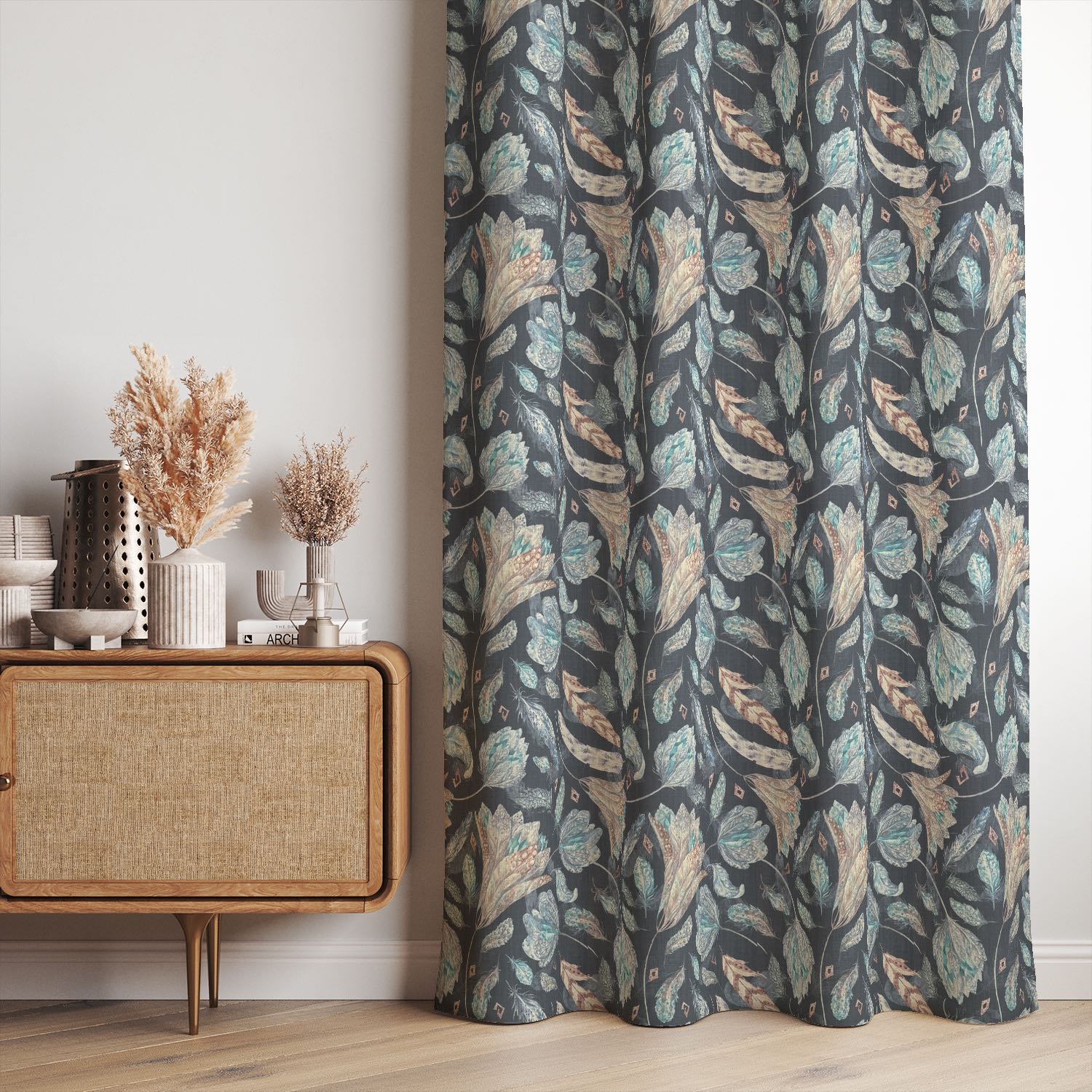
The most comfortable comfort isn't in the passive. It's an environment that is created and weaved with sound, texture and light. It is also a place of touch and harmony. Upholstery and curtains are among the biggest fabrics that play a role in creating this atmosphere. The most frequent mistake is choosing these fabrics without taking into account the other textiles. This can create the impression of a dissonance within a area, making it appear well-organized, yet feel unsettling. This guide suggests that combining fabrics for upholstery with custom-made curtains is an exercise in creating a cohesive sensory experience and a deliberate investment in layered comfort that transcends the simple color matching. The guide will examine ten key subtle factors that impact the pairing. By leveraging the strengths of the fabric shops in the West Midlands we can create an enduring, solid and deeply relaxing result.
Detailed Top 10 Things to Be aware of:
1. The Hierarchy and Textural Dialogue: From Fingertips to Floors.
Comfort is something that should be felt before it can be seen. Start by creating a conversation between the fabrics. The principle is contrast within a coherent language. Combine a rustic, nubby linen upholstery fabric (tactile and inviting) with a smooth velvet, heavyweight wool for curtains (offering an aesthetic calm and soft light absorption). Contrarily, a modern chenille that is tight-weaved on a sofa demands curtains with physical dimension, like a coarse herringbone or a slubbed silk. It is easy to feel this conversation by rubbing the swatches fabric between your hands in Lichfield's carefully curated boutiques. Do not mix two textures that are slick (e.g. leather and sateen), as it can cause the impression of a slippery, icy feeling, or two too rough textures.
2. The Acoustic Engineering Duet: Softening Sound Through Strategic Layering.
Acoustic panels typically consist up of heavy curtains and furniture that has padded upholstery. Combining both of these elements can aid to dampen sound. A soft, dense upholstery fabric like a high-pile velvet can absorb the mid and high frequencies (voices, the sound of clatter). Combining the dense interlined curtain fabrics, like felt wool or a triple-weaved woven cotton, with it to block noises and reduce lower frequencies. It creates a room which is much more peaceful. Birmingham's fabric shops that provide offices and hotels can offer the technical information for the sound absorption coefficients of their upholstery fabrics that are made for contract.
3. The Light-Life Analysis: How each material will age when in the Sun's path.
It's a sensible method of ensuring longevity. The path of the sun's rays through the space can be traced. Fabrics with good UV stability are needed for the sofa or chair that is in direct sunlight (often shown by Martindale rub-count and solution dyed fibres that are available from Birmingham contract manufacturers). In the same room, curtains should be lined using a UV protection or a coated blackout material, irrespective of the face fabric. Choose a more elegant, delicate silk or wool for both of these elements in a room with gentle north light. A sun-resistant sofa paired with a silk curtain that is not lined in a bright room is a way to protect yourself from rapid deterioration.
4. The "Maintenance Rhythm" Synchronisation: Making sure that you have a harmonious care schedule.
Your fabric must meet the same maintenance requirements. It is a comfort disaster to have a sofa covered in a delicate, dry-clean-only linen-look fabric paired with machine-washable cotton curtains. When one requires costly professional cleaning, the other is put in the washing machine and causes an unbalance in freshness, wear and the financial cost. Make sure you follow a consistent cleaning regime. For homes with families it is usually best to pick high-performance upholstery materials in the crypton style (found at Walsall's useful stores) and pair them with washable, durable curtains like canvas or cottons. This creates a stress-free clean and easy to maintain.
5. The Weight-Drape Equilibrium in the Space: Physical and Visual Balancing.
The weight of the fabric will determine the overall perceived weight of a space. A huge, heavily covered Chesterfield with dark leather demands curtains that are of the same visual weight that is full-length and with a deep pleat, and with a substantial feel, like brocade or woolen, thick fabric. The more light, softer mid-century sofa in clean cotton needs curtains with a lighter curtain--a linen-blend or a heavier-weight fabric that can puddle and float. This skewedness (heavy furniture and thin curtains or vice-versa), makes the room appear unbalanced.
6. The pattern and Scale Discussion A Dialogue Is Not A Monologue
Pairing patterns require speaking the same visual language, but at different volumes. If your fabric for upholstery is a big, bold flower (a statement) The curtain fabric must speak softly. A small geometric pattern would be perfect, or perhaps a solid with an pronounced weave. It is also possible to reverse the effect: a solid, textural sofa allows for a medium-scale pattern to be applied to the curtains. It is important to not have two loud patterns screaming at each one. Walsall's fabric stores specialize in traditional domestic fabrics and are a good location to locate simple, small-scale curtains.
7. The Local Ecosystem of Coordinating: Use One Shop to unify the Plan.
Lichfield has a number of specialist shops that excel in this field. If you want to avoid buying upholstery fabric in one city, as well as curtains in another city, purchase the colour matching and texture matching from the boutique that has a well-curated assortment. Often, their sample books contain coordinated collections by mills that make furniture and heavier weights for dress/upholstery. The skilled eye of the assistant ensures that the colors are similar. This task is nearly impossible when you are sourcing fabrics from various places. This gives a planned, seamless look that looks professionally crafted.
8. The Investment Apportionment Plan: Where To Splurge And Where To Save.
True comfort investment is a strategic investment. Spend your money where wear and enjoyment are of the highest importance. This often means choosing an upholstery fabric that is of high-end quality for durability and everyday touch, and using a curtain fabric with an innovative design or a lower price. Spending more on the velvet sofa, which is durable and wear-resistant, can be a good investment. However, you could save money by choosing the heavier, more appealing fabric like the cotton curtains from Walsall. The luxury of the curtain is not only from the face fabric, but also from its structure.
9. The Psychological Tone-Setting Technique: Fabric Combinations That Elicit Specific moods.
Imagine the atmosphere you'd like to create. Mix matte fabric with deep tones for a calming library or bedroom. Matte velvet curtains will absorb both light and noise, providing a calm environment. To make a fresh, energizing sunroom, combine clean, textural fabric like a cotton duck tickling on the seating with a clean linen union to the curtains, catching light and feeling airy. This intentional pairing goes beyond aesthetics and focuses on environmental psychology by using fabric as a way to determine the temperature of an emotional room.
10. The "Future-Proofing" through Timeless Neutrals and Changeable Layers.
The best option is to pair a neutral, timeless upholstery fabric (such as a stone-colored wool blend or a charcoal-colored tweed) and custom made curtains that are less costly and more easily to change. Curtains are the element that can change with the seasons or moods. Curtains can be made in any colour or pattern you like and your sofas and armchairs will last for years. This method promotes the curtain as a renewable part of your interior, making the initial pairing an opportunity to create an adaptable, flexible, and enduring structure for your ease of use. View the best dress fabric for website info including curtains & fabrics, window blinds and curtains, tie backs for curtains, curtains buy, custom curtains, window blinds and curtains, blinds with fabric, window blinds with fabric, blinds uk, curtain fabric and more.
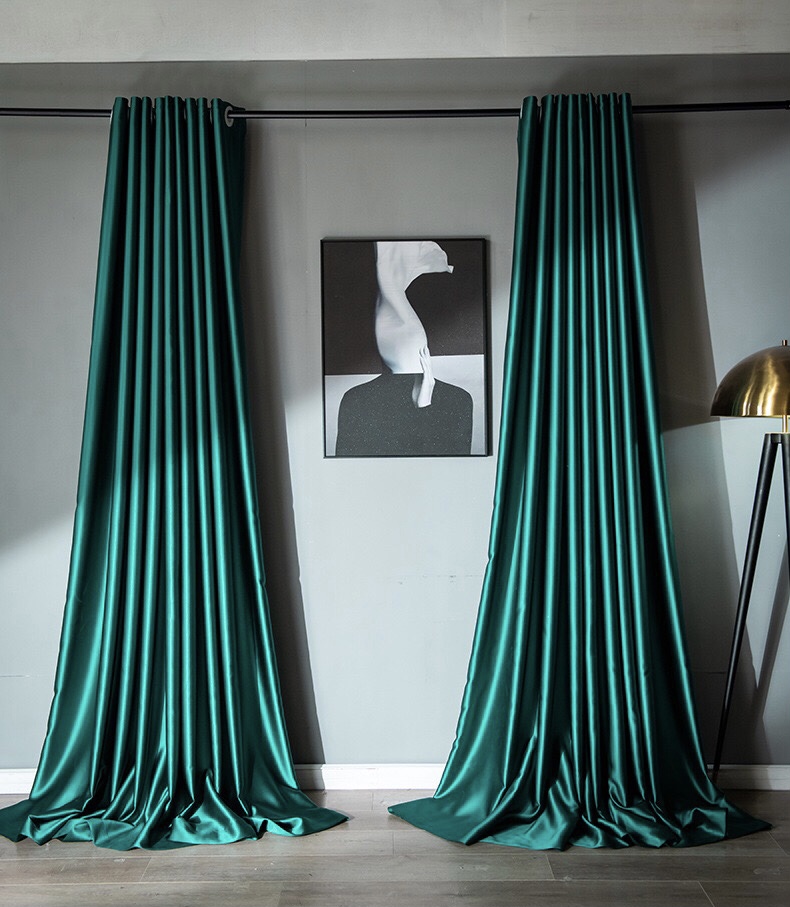
How Can You Determine The Amount Of Fabric You Need For Diy Curtains And Upholstery
It's often the case that creative endeavors do not manage to go from adorning a piece of fabric metre by millimetre, to making sure they purchase the quantity needed for DIY projects. Two spectres: insufficient and waste. It is often the cause to over-ordering or a project being stopped at the midpoint. This guide will help you understand the process of calculation for upholstery and curtains, going beyond simple length-and-width formulas to include the subtle variables of pile, pattern and fabric behavior. It is crucial to link this mathematical process with the realities of purchasing fabrics from different kinds of shops in the West Midlands. This acknowledges that the place you purchase directly influences the way you calculate. If you can grasp these concepts, then you'll transform from a frightened buyer into an expert, confident buyer, ready to take on with boutiques, markets, or trade counters.
The 10 Most Important Things You Should Be Educated About:
1. The "Fullness Factor Fallacy": Why you're likely to double (not meet) the width of your rail.
The most frequent DIY mistake is to buy curtain fabric that matches exactly the width of curtain pole or track. This can result in flat, thin curtains. Professionally designed curtains are made with the "fullness" proportion between 2 and 2.5x the rail width. The fabric that is not used will be pleated, creating elegant light-blocking folds. You must multiply the rail width by 2.5 to obtain the required width of fabric. ** For a 20cm rail you will require 500cm of total length (5 metres) prior to considering pattern repeats. It is imperative to know that this is not negotiable for those who want a professional look.
2. The Pattern Repeat tax: the hidden multiplier that determines your meters.
If you select a patterned material, your calculations shift from simple math to a strategic plan. The pattern repeat needs to be multiplied by multiples. This measurement can be found using the label on the fabric or by measuring from a specific point on the pattern to the spot below. The formula is **[(Finished Size + Heading Allowance (Hem) * [Pattern Repeat] = the number of repeats required. ** Round the figure up, and then divide it by Pattern Repeat to get your **Cut-Length per Drop**. A 250cm length with 64cm of repeat length will need 3.9 repetitions. The number is then rounded to 4. 4 x 64cm equals an amount of 256cm. The "waste" is vital for pattern alignment.
3. Purchase width and length The "Railroading Revelation" for wide upholstery.
Sewing wasteful seams is an issue for large upholstery projects like big sofa or head board. Railroading: Make use of the width of the fabric to determine the length of your project. If a fabric is 137cm in width, and the length of the seat on your sofa is 220cm, it's normal to join two pieces. If the pattern allows it (ask at the shop! You can cut out a 220cm piece of fabric from its *width*, if the fabric is long enough to fit on the bolt. This requires a longer bolt, but results in an unidirectional piece. Birmingham's shop counters are able to calculate this. Walsall might need it explained.
4. The Dressmaker's Approach to Curtains: The Reasons to Respect the Fabric's "Grain."
It is essential to cut curtains with the grain, just as you would with making dresses. Fabric's warps (running parallel the selvedge of the fabric) should be vertical to ensure a perfect hang. Take note when calculating the length of extra-long curtains that some upholstery fabric comes with a "nap". This is a pattern that runs in a direction (like a stylised flower or velvet). Every drop of fabric has to be cut in the same direction. This can lead to waste. The shops in Lichfield which are dedicated to clothes will appreciate the significance of "cutting on straight grain to cut drapery". They understand this better than any general furniture retailer.
5. The Lichfield Loophole: Using Dress Fabric to make curtains and its Calculation Quirk.
When you purchase dress fabrics (e.g. an extremely heavy linen or brocade) from a Lichfield shop for curtains there is a limit on the width. Fabrics for dresses can range from 110cm to 150cm in width while curtain fabric can range from between 137cm and 150cm. For your **Total Fabric Width** (from the point 1) you'll need a greater number of panels. This has an impact on both seam allowances as well as pattern matching. The calculation is as follows *Total Material Width needed / Bolt width of fabric = Number of Panels. ** Round up. Multiplying the total by your **Cut-Length** will give you the final measure. It is typical to require more meters than when using wider fabric. However, the individuality and price of the fabric is often enough to make up for it.
6. The "Upholstery Fabrics by the Metre Puzzle": Calculating Cushion Boxing and Buttons.
Calculating a flat back or seat for upholstery is simple by multiplying width + seam allowance times length seam allowance. The complexity comes with deep buttoning and boxing sides of a cushion. If you want to box a cushion, you can measure its perimeter and then add seam allowance. The length of a boxing strip is determined by this. If you're making deep-buttoned backings make sure to double the flat area. This will allow for the fabric to be pulled through the tufts. The "yield guides" also known as consultants are available at reputable shops that specialise in upholstery fabrics in Birmingham. They can assist with these calculations based on the design of your furniture.
7. The Walsall Value-Engine: Sourcing Linings and Calico Mock-Ups First.
Prior to cutting the high-end fabric that you will use for your main piece, make the "toile", i.e. the mockup made from inexpensive fabric like calico. Walsall's fabric shops are a good source of this important but cheap muslin. Calculate, and then purchase your calico, using the exact formulas that you'll use to make your final product. This will allow you to test your fullness calculations and enhance your sewing skills without any risk. Walsall can be utilized to calculate the cost of interlining and lining for cost efficiency. This is due to the fact that it's an independent layer can be used as an calculation layer.
8. The Selvedge and Shrinkage Allocation: The Unseen measurements that matter.
Allowances should be included in all calculations. Seams: Add 2cm each time you join the seam (so add 4cm width to each panel, even if you side-sealed). Standard curtain hems have a 15cm-deep bottom hem and a 10cm high top heading. You should also give an allowance of 5-8 percent for shrinkage in natural fibers like cotton or linen in the event that pre-washing is not performed. This means adding 12.5cm to a length of 250cm. If you want shops to cut fabric by the metre, they should be given your *cut length* (including all allowances), not your *finished length*.
9. The Birmingham Bulk Buy Buffer: the Strategic "Safety Metre."
To prevent the hassle of reordering dye-lots in Birmingham's markets and trade rolls when it's not always possible to do this, you can establish a policy known as "safety metres" when buying. When your final calculations are completed, add one full pattern repeat's length (or 0.5m for plains) to the total amount you order. This will help ensure that you are covered for any cutting or threading mistakes as well as any future repairs. The marginal cost can be considered an affordable insurance policy against disaster. This buffer isn't as crucial in Lichfield and other towns where boutiques might be able to order an exact fabric, or for plain fabrics from Walsall.
10. Make a final copy of the verification on paper or floor.
Do a final inspection before having the fabric cut in the shop or cut. On graph paper or your floor, use tape to map the bolt's width as well as the lengths you need to cut. Layout each panel in a visual manner and note the patterns repeated and nap direction. This "paper doll" exercise often reveals one last optimisation--perhaps re-ordering drops can save half a repeat. The last stage, the meditative one is the one that separates a nervous DIYer from confident maker. This ensures that each millimetre of Birmingham's bustle or Walsall's practicality serves a purpose.